Category: Home & Living

  • 8 Easy Kitchen Improvements That Make a Noticeable Difference

    8 Easy Kitchen Improvements That Make a Noticeable Difference

    Kitchen updates in 2026 focus on simple changes that improve comfort, usability, and appearance without requiring full renovation work. Small adjustments can reshape how the room functions day to day.

    Many of these improvements can be completed quickly and still produce a clear visual and practical upgrade. The following slides outline eight changes that bring steady improvement to common kitchen layouts.

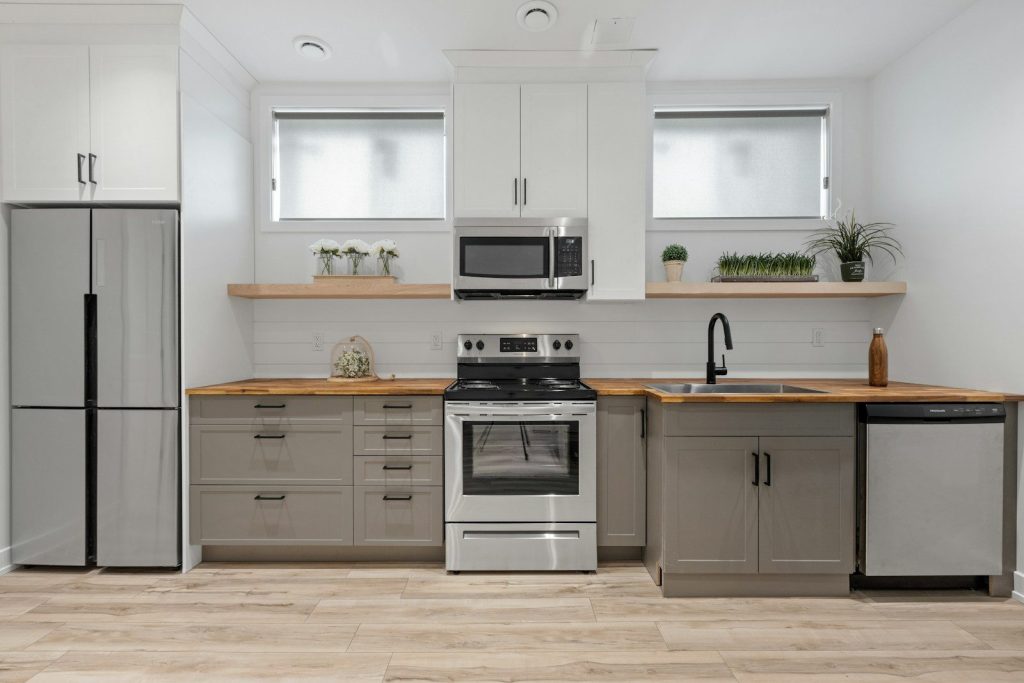
    1. Replace Cabinet Handles and Drawer Pulls

    white wooden framed glass window
    Photo by Point3D Commercial Imaging Ltd. on Unsplash

    Cabinet hardware sets the tone for the kitchen’s overall look. New handles and pulls create an updated feel even when cabinets remain unchanged. Matte black, brushed brass, and clean stainless finishes are widely used in 2026 kitchen designs.

    Matching all hardware across cabinets and drawers helps create visual consistency. Installation requires minimal tools and can be completed in a short time.

    2. Add Layered Lighting

    brown and white pendant lamp
    Photo by Alexander Fife on Unsplash

    Lighting affects both function and atmosphere in the kitchen. Relying on a single overhead light often leaves work areas dim. Under-cabinet LED lighting improves visibility for chopping, cooking, and cleaning tasks.

    Pendant lights above counters or islands introduce focused illumination and structure. Adjustable brightness settings allow lighting to shift between daytime activity and evening use.

    3. Update the Backsplash

    empty sink
    Photo by Christian Mackie on Unsplash

    A backsplash update changes the appearance of a kitchen without altering its layout. Peel-and-stick materials provide an accessible option for quick refreshes, offering patterns that resemble tile or stone.

    Traditional tile installation remains a durable choice for long-term use. A clean backsplash design helps protect walls while adding visual texture and contrast to the cooking area.

    4. Install a Modern Faucet

    a kitchen with a sink and a window
    Photo by Point3D Commercial Imaging Ltd. on Unsplash

    A faucet replacement improves both daily function and style. Pull-down and touchless models are widely used in 2026 for convenience and cleaner operation.

    These designs reduce effort during food preparation and dishwashing. Water-efficient features support reduced usage without affecting performance. Finishes like matte black and brushed steel blend with most cabinet styles.

    5. Improve Storage Layout

    a shelf filled with containers and containers of food
    Photo by Ambitious Studio* | Rick Barrett on Unsplash

    Better storage design reduces clutter and improves access to everyday items. Pull-out shelves allow items at the back of cabinets to remain reachable.

    Drawer dividers keep utensils, spices, and tools organized. Corner storage systems help use areas that often go unused. Vertical racks for trays and cutting boards free up cabinet width and improve order.

    6. Clear and Organize Countertops

    four brown stools
    Photo by roam in color on Unsplash

    Countertops function best when kept open and organized. Removing unused items creates more usable preparation area. Small containers and trays help group frequently used items such as oils, spices, and cooking tools.

    Designated zones for coffee preparation or meal prep reduce unnecessary movement during cooking. A controlled surface layout also simplifies cleaning routines.

    7. Repaint Cabinets or Walls

    white wooden kitchen cabinet with white pendant lamp
    Photo by Clay Elliot on Unsplash

    Fresh paint changes the kitchen’s appearance without structural work. Light neutral tones remain widely used in 2026 because they brighten enclosed areas and pair well with different finishes.

    Cabinets can be painted to extend their lifespan and update their look. Washable, moisture-resistant paint helps maintain durability in high-use areas. Even subtle color shifts alter the overall tone of the room.

    8. Upgrade Small Appliances

    black and gray blender
    Photo by Daniel Norris on Unsplash

    Modern appliances improve efficiency and reduce time spent on daily tasks. Compact air fryers, induction cooktops, and advanced coffee machines have become common in updated kitchens.

    Energy-efficient models reduce power use and improve consistency during cooking. Replacing older appliances can also improve safety and reliability. Smart features allow better control of cooking settings and timing.

    Meaningful Improvements

    white and black kitchen counter
    Photo by Lotus Design N Print on Unsplash

    Small kitchen updates can create meaningful improvements in both function and appearance. Hardware changes, lighting upgrades, storage improvements, and appliance replacements work together to improve usability.

    Each adjustment contributes to a more organized and efficient environment. In 2026, kitchen design continues to prioritize practical improvements that support everyday routines and long-term comfort.

  • 9 Plants That Grow Best in Pots and Containers

    9 Plants That Grow Best in Pots and Containers

    Container gardening remains popular in 2026 because it works well for apartments, patios, balconies, and small yards. Pots and planters allow people to grow vegetables, herbs, flowers, and indoor plants without needing a large garden.

    Containers also make gardening easier to manage. Plants can be moved to follow sunlight, avoid bad weather, or improve the appearance of a space. Choosing plants that adapt well to pots helps create healthier growth and simpler maintenance. Here are nine plants that consistently perform well in containers.

    1. Tomatoes

    tomato fruits
    Photo by Cesar Fernandes on Unsplash

    Tomatoes are one of the best vegetables for container gardening. Smaller varieties such as cherry tomatoes and patio hybrids grow especially well in medium-sized pots. Tomatoes need strong sunlight, regular watering, and nutrient-rich soil. Since containers dry faster than traditional garden beds, checking moisture levels often is important during hot weather.

    Support cages or stakes help hold the plant upright as fruit develops. With proper care, container tomatoes can produce large harvests throughout the season.

    2. Herbs

    green plant on brown clay pot
    Photo by Markus Spiske on Unsplash

    Herbs are ideal for containers because most stay compact and grow easily in small areas. Basil, parsley, thyme, rosemary, oregano, and cilantro are all popular choices.

    Fresh herbs add flavor to meals and can be harvested regularly throughout the growing season. Many herbs also release pleasant scents that improve indoor and outdoor spaces. Mint should be planted separately because it spreads quickly and can crowd out nearby plants.

    3. Peppers

    a close up of a plant with orange peppers on it
    Photo by Anastasia Judt on Unsplash

    Pepper plants thrive in warm weather and adapt well to containers. Bell peppers, jalapeños, and banana peppers are common choices for patios and balconies.

    Containers allow gardeners to move peppers indoors or under shelter during sudden temperature drops. This flexibility can protect developing fruit and extend the growing season. The colorful peppers also add visual appeal. Red, yellow, green, and orange varieties create a bright display in container gardens.

    4. Strawberries

    A person picking strawberries from a bush
    Photo by Hailey Tong on Unsplash

    Strawberries grow very well in hanging baskets, shallow planters, and window boxes. Their compact roots make them suitable for smaller containers.

    Growing strawberries off the ground helps keep the fruit cleaner and reduces pest problems. Hanging baskets also allow vines to trail naturally over the sides. Many newer strawberry varieties continue producing fruit through much of the season when given enough sunlight and water.

    5. Snake Plants

    green snake plant on table
    Photo by Kara Eads on Unsplash

    Snake plants remain one of the most dependable indoor container plants. They tolerate low light, dry air, and irregular watering better than many other houseplants.

    Their tall leaves fit modern decorating styles and work well in apartments or office spaces. Snake plants also grow slowly, which reduces the need for frequent repotting. Overwatering is the most common problem. Letting the soil dry between waterings usually keeps the plant healthy.

    6. Lavender

    purple-petaled flower
    Photo by Louis Zhang on Unsplash

    Lavender grows successfully in containers with full sunlight and well-draining soil. The fragrant flowers attract pollinators outdoors and add natural scent to patios and balconies.

    Containers help control soil moisture more effectively, which benefits lavender because wet roots can damage the plant. Clay pots often work especially well for this reason.

    Dried lavender can also be used in decorative arrangements or home fragrance products.

    7. Lettuce and Leafy Greens

    green-leafed plants
    Photo by Lulucmy on Unsplash

    Leafy greens such as lettuce, spinach, kale, and arugula grow quickly in containers and do not require deep soil.

    These plants are well suited for window boxes and small balcony gardens. Cooler temperatures often improve flavor and help prevent the plants from bolting too quickly. Harvesting the outer leaves first allows many greens to continue producing throughout the season.

    8. Succulents

    assorted-color succulent plants
    Photo by lan deng on Unsplash

    Succulents remain popular because they require little maintenance and adapt easily to containers. Jade plants, aloe, echeveria, and haworthia are common choices.

    Most succulents prefer bright light and dry soil conditions. Containers with drainage holes help prevent excess moisture from damaging the roots. Their compact size makes succulents useful for desks, shelves, patios, and decorative indoor arrangements.

    Container Gardening

    a wooden table topped with lots of potted plants
    Photo by Tassilo Gröper on Unsplash

    Container gardening allows people to grow plants in almost any location, including balconies, patios, and indoor areas. Pots and planters also make it easier to manage sunlight, watering, and changing weather conditions.

    Tomatoes, herbs, peppers, strawberries, snake plants, lavender, leafy greens, and succulents continue to perform especially well in containers because they adapt easily to smaller growing areas. As gardening trends continue evolving in 2026, container gardening remains one of the simplest ways to grow healthy plants at home.

  • 5 Florida Beach Towns Experts Think Will Be Strong Real Estate Buys

    5 Florida Beach Towns Experts Think Will Be Strong Real Estate Buys

    Florida’s beach towns continue attracting buyers in 2026. Warm weather, lower taxes, and flexible work arrangements have helped maintain housing demand across many coastal communities. Some markets have cooled after the rapid price growth earlier in the decade, though several towns still attract attention from buyers and real estate professionals.

    Housing analysts often look at population growth, tourism activity, inventory levels, and local development projects when evaluating long-term value. Buyers are also paying closer attention to flood prevention efforts, insurance costs, and year-round amenities. Several Florida beach towns continue standing out in conversations about long-term real estate potential.

    1. St. Augustine Continues Drawing Buyers

    aerial photo of village
    Photo by Lance Asper on Unsplash

    St. Augustine remains one of Florida’s more stable coastal housing markets. Historic neighborhoods, waterfront views, and a strong tourism industry continue attracting buyers from across the country. The city appeals to retirees, remote workers, and families searching for a quieter coastal setting. Housing demand has remained relatively steady compared to some Florida markets that experienced sharper price swings.

    New restaurants, healthcare expansion, and infrastructure projects have supported local growth. Short-term rental properties near the historic district and beachfront areas also continue attracting investor interest. Real estate professionals continue watching St. Augustine because of its steady tourism economy and consistent buyer demand.

    2. Naples Remains a Luxury Market Leader

    city buildings near sea under white clouds and blue sky during daytime
    Photo by Danilo D’Agostino on Unsplash

    Naples continues ranking among Florida’s strongest luxury real estate markets in 2026. Buyers from higher-tax states still relocate to Southwest Florida for financial reasons and coastal living. Waterfront homes and upscale condominiums remain popular, especially near beaches and golf communities. Some buyers are also exploring neighborhoods outside the city center where prices may be lower.

    Naples benefits from a wealthy year-round population, strong retirement demand, and an established service economy. Those factors have helped support property values during periods of slower national housing activity. Luxury rental properties also remain popular during peak travel seasons.

    3. New Smyrna Beach Continues Growing

    a sandy beach next to the ocean under a blue sky
    Photo by Unseen Beaches on Unsplash

    New Smyrna Beach has seen steady growth over recent years. The Atlantic Coast town attracts buyers searching for a quieter beach community with less tourism traffic than some larger Florida cities. The local arts scene, surf culture, and walkable downtown district continue attracting younger buyers and remote workers.

    Limited housing inventory has also contributed to rising property values in many parts of the area. Vacation rentals remain popular during busy travel periods. The town’s location near Orlando gives residents access to larger job markets and airports while still offering a coastal lifestyle.

    4. Sarasota Maintains Broad Buyer Demand

    City buildings stand along the coastline with a blue sky.
    Photo by Jeffrey Eisen on Unsplash

    Sarasota continues attracting attention from homebuyers and investors. The Gulf Coast city offers beaches, entertainment, restaurants, and a growing business community. Housing demand comes from retirees, working professionals, and second-home buyers. That broad demand has helped support prices across several property types.

    Downtown condominium construction has continued, and nearby communities remain competitive because inventory stays limited. Areas near Siesta Key and Lakewood Ranch continue attracting buyer interest. Healthcare expansion and population growth have also helped support Sarasota’s housing market.

    5. Destin Remains Popular With Vacation Buyers

    aerial view of city near sea during daytime
    Photo by TopSphere Media on Unsplash

    Destin continues ranking among Florida’s best-known beach destinations. White-sand beaches and strong tourism activity have helped support the local housing market in 2026. Short-term rentals remain popular, especially during spring and summer travel seasons. Many buyers purchase second homes that can also generate rental income during parts of the year.

    Real estate professionals often point to repeat tourism as one reason Destin continues attracting housing demand. Many visitors return to the area regularly before eventually purchasing property. Marina improvements, restaurant growth, and continued tourism investment have also supported local development.

    What Real Estate Professionals Watch Closely

    aerial view of beach during daytime
    Photo by TopSphere Media on Unsplash

    Real estate professionals usually examine several factors before recommending coastal markets. Population growth is often viewed as an indicator of long-term housing demand. Communities gaining full-time residents may experience steadier appreciation over time.

    Infrastructure projects can also influence property values. Road improvements, flood prevention systems, and hurricane protection efforts remain important across Florida’s coastal regions. Insurance costs have become another major factor for buyers. Many homebuyers now research flood zones, elevation levels, and storm history before purchasing homes near the water.

    Walkability, entertainment, restaurants, and beach access also continue shaping buyer interest.

    Remote Work Still Shapes Coastal Markets

    city skyline under blue sky during daytime
    Photo by Lance Asper on Unsplash

    Remote and hybrid work arrangements continue influencing Florida’s housing market in 2026. Many professionals now have more flexibility when deciding where to live.

    Beach towns once associated mostly with retirees are attracting younger buyers searching for coastal living and flexible lifestyles. Coffee shops, coworking spaces, and reliable internet access have become attractive features in many communities.

    Smaller beach towns have benefited from this trend. Buyers continue prioritizing outdoor recreation, lower traffic levels, and waterfront access. Homes with office space, outdoor patios, and updated interiors remain popular with remote workers.

    Buyers Still Face Market Challenges

    high-angle photography of two red and white vehicles on concrete road between trees and buildings at daytime
    Photo by Lance Asper on Unsplash

    Florida’s beach markets continue attracting interest, though buyers still face several challenges. Insurance premiums remain expensive in some coastal areas. Property taxes and storm-related building requirements can also increase ownership costs over time.

    Some housing markets may experience slower appreciation if inventory levels continue rising. Tourism trends also affect local economies in areas heavily dependent on vacation travel. Many buyers work with local real estate agents and review neighborhood-specific data before making purchasing decisions.

    Florida Beach Towns Continue Attracting Interest

    green palm trees near body of water during daytime
    Photo by Martin Zangerl on Unsplash

    Florida’s coastal housing market continues drawing buyers in 2026. Beach towns remain attractive for retirees, investors, second-home buyers, and remote workers. St. Augustine, Naples, New Smyrna Beach, Sarasota, and Destin each offer different advantages.

    Tourism activity, population growth, and limited inventory continue supporting demand in many parts of these markets.

    Careful research remains important as buyers navigate insurance costs, local regulations, and changing market conditions. Many real estate professionals continue watching Florida’s coastal towns for long-term housing trends.

  • 8 Tough Perennials for a Low-Maintenance Garden

    8 Tough Perennials for a Low-Maintenance Garden

    American gardeners are shifting toward plants that return every year with minimal effort. Replanting annuals each spring, increasing water bills, and losing plants after the first frost no longer appeals to many homeowners.

    Perennials offer a simpler approach. Once established, they tolerate drought, heat, poor soil, and inconsistent care far better than most annual flowers. Many also improve as they mature, filling out naturally over time.

    The eight plants in this article were selected for resilience, ornamental value, and reliable long-term performance in American gardens.

    1. Black-Eyed Susan

    a group of yellow flowers
    Photo by May on Unsplash

    Black-Eyed Susan evolved in dry prairie conditions with intense sun and poor soil, which explains its durability in home gardens. It blooms from midsummer into early fall and continues flowering without constant deadheading.

    Cold-hardy to Zone 3, it thrives in full sun with minimal watering once rooted. The flowers attract bees and butterflies during summer, while seed heads provide food for birds in fall and winter.

    Leaving dried seed heads standing through winter also adds texture and structure to the garden during colder months.

    2. Purple Coneflower

    a close up of a bunch of purple flowers
    Photo by Alissa Kennedy on Unsplash

    Purple Coneflower develops deep roots that allow mature plants to tolerate extended dry periods with little visible stress. Established clumps bloom for up to ten weeks during summer and attract a wide variety of pollinators.

    The traditional rosy-purple form consistently outperforms heavily modified hybrids in both lifespan and reliability. Many newer double-flowered or coral-colored varieties decline more quickly after several seasons.

    A healthy clump often looks stronger in its third or fourth year than when first planted.

    3. Daylily

    a bunch of flowers that are in the grass
    Photo by Ted Balmer on Unsplash

    Daylily remains one of the easiest flowering perennials to grow. It tolerates nearly any soil type and performs well in either full sun or partial shade.

    Each flower blooms for only one day, though mature plants produce hundreds of buds across a four to six week flowering period. That steady sequence keeps the display looking continuous throughout the season.

    Daylilies require little maintenance once established and recover quickly from drought or inconsistent watering.

    4. Russian Sage

    brown butterfly perched on green plant during daytime
    Photo by Isa on Unsplash

    Russian Sage, now classified as Salvia yangii, produces tall sprays of lavender-blue flowers from midsummer into fall. Silvery stems and aromatic foliage give the plant visual interest even outside peak bloom periods.

    It performs best in full sun with well-drained soil and handles heat extremely well. Established plants tolerate long dry spells without difficulty.

    Deer usually avoid Russian Sage because of its fragrant foliage, making it useful in areas with browsing pressure.

    5. Sedum

    shallow focus photo of pink flowers
    Photo by Laura Baker on Unsplash

    Sedum stores water directly in its thick leaves, allowing mature plants to go long periods without rainfall. Upright varieties produce broad flower clusters that open pink in late summer and gradually deepen into bronze tones during fall.

    The dried flower heads often remain upright through winter, extending seasonal interest well beyond the growing season.

    Sedums require little beyond full sun and decent drainage to remain healthy for years.

    6. Karl Foerster Grass

    a field of tall grass with trees in the background
    Photo by Annie Spratt on Unsplash

    Karl Foerster Feather Reed Grass grows in a narrow upright shape that adds strong vertical structure to perennial borders. Feathery plumes emerge in early summer and slowly shift from green to golden tan as the season progresses.

    Even during winter, dried stems remain standing through snow and wind, helping gardens maintain structure after flowering plants die back.

    The plant requires minimal maintenance beyond occasional cutting back in late winter or early spring.

    7. Catmint

    a bunch of purple flowers that are in the grass
    Photo by Ronin on Unsplash

    Catmint produces lavender-blue flowers from late spring into early summer and often reblooms after trimming. Bees and butterflies visit the flowers heavily throughout the growing season.

    The aromatic foliage helps discourage deer, and the plant handles poor soil, drought, and summer heat with little difficulty.

    Catmint spreads into soft mounds that work well along pathways, borders, or mixed perennial beds.

    8. Hosta

    a bee on a flower
    Photo by Maddy Weiss on Unsplash

    Hosta solves one of the most difficult gardening problems: deep shade. It grows successfully beneath trees and in low-light spaces where many flowering plants struggle.

    Leaf sizes range from compact chartreuse mounds to large blue-green varieties with leaves spanning nearly two feet across. The foliage provides season-long texture even when plants are not flowering.

    Slugs can become an issue in wet conditions, though hostas otherwise require little maintenance beyond occasional division every several years.

    Building a Garden That Lasts

    beige moth on pirple flowers
    Photo by C VanHeest on Unsplash

    The first growing season requires the most attention. Newly planted perennials benefit from roughly one inch of water per week during their first summer. By the second year, most become largely self-sufficient.

    Fall planting often encourages stronger root development because soil stays warm longer after air temperatures cool. Adding mulch after planting helps conserve moisture and suppress weeds.

    A perennial garden improves with time. Clumps expand naturally, pollinators return each season, and the planting develops a settled appearance that annual gardens rarely achieve. Starting with just a few reliable plants and expanding gradually often produces the strongest long-term results.

  • 8 States in America With the Hardest-Working Residents

    8 States in America With the Hardest-Working Residents

    Americans are working differently than they were a decade ago. Remote arrangements, gig platforms, and AI-assisted workflows have completely changed what a typical workday looks like. But, despite these changes, certain states have always had a reputation for being really hardworking, and that reputation has not changed.

    This list doesn’t just look into raw GDP numbers and unemployment figures. The criteria include average weekly work hours, the share of residents holding multiple jobs, labor force participation rates, and the concentration of industries known for long or physically demanding work: agriculture, manufacturing, healthcare, and construction. Eight states rise to the top of every credible measure, year after year.

    1. Alaska

    brown and white concrete building near green trees and mountain during daytime
    Photo by Patrick Federi on Unsplash

    Alaska operates on a different rhythm than the rest of the country. Commercial fishing seasons are brutal, with crab and salmon crews routinely working 18-hour shifts during peak runs. Oil and gas workers on the North Slope rotate two weeks on, two weeks off, and those two weeks are relentless.

    The construction season is compressed by arctic winters, so nothing moves slowly when the warm months finally arrive. High costs of living push many residents to hold second jobs, keeping Alaska near the top of national hard-work rankings year after year.

    2. North Dakota

    a city street with snow on the ground and buildings in the background
    Photo by Sunil GC on Unsplash

    For a state with fewer than 800,000 people, North Dakota posts some of the country’s most impressive labor numbers. Its agricultural sector is enormous relative to the population, with wheat, corn, and soybean farming demanding long seasons and real physical endurance.

    The Bakken shale formation brought an energy boom that reshaped the state’s labor culture, and even as oil prices fluctuate, the work ethic has remained. North Dakota routinely records one of the lowest unemployment rates in the nation, and its labor force participation sits well above the national average.

    3. Mississippi

    curtain wall building during night time
    Photo by Tom Conway on Unsplash

    Mississippi consistently ranks among the top five states nationally for the share of residents holding more than one job. The manufacturing base drives much of that output: poultry processing, auto parts, and Gulf Coast shipbuilding are all labor-intensive industries with demanding schedules.

    Agriculture remains significant as well, with the state ranking high for catfish and broiler chicken production, both requiring year-round physical effort. The combination of economic necessity and a deeply rooted willingness to keep showing up defines the character of Mississippi’s workforce.

    4. Nebraska

    architectural photography of buildings
    Photo by John Matychuk on Unsplash

    Nebraska’s economy runs on industries that do not allow downtime. Cattle, corn, and meatpacking are the three pillars, and the Omaha metro area hosts some of the largest beef-processing plants in the world, running double and triple shifts around the clock.

    Beyond agriculture, Omaha has a well-established insurance and finance sector where long hours are part of the professional culture. Nebraska hovers near the top for labor force participation and near the bottom for unemployment year after year, regardless of broader economic conditions.

    5. Texas

    photo of city
    Photo by Carlos Delgado on Unsplash

    Texas holds the second-largest economy in the United States, built on an enormous volume of labor across multiple sectors. The Permian Basin remains one of the world’s most productive oil fields, where 12-hour days on rigs are standard.

    A construction sector running at full speed, driven by population growth that added hundreds of thousands of new residents in 2025 alone, keeps demand for workers consistently high. Manufacturing in aerospace, semiconductors, and food processing adds further hours to the state’s total. The expectation of hard work cuts across every industry and income level.

    6. Kansas

    New York City
    Photo by Colton Sturgeon on Unsplash

    Kansas ranks among the most consistently hardworking states in the country. The wheat harvest demands combines running nearly 24 hours a day during peak season, with operators pushing through days on minimal sleep to catch dry weather windows that close fast.

    Wichita, known as the Air Capital of the World, is home to major aircraft manufacturing operations where precision and long shifts are constants. Kansas also ranks high for labor force participation and low for the share of people who have stopped looking for work entirely.

    7. Wyoming

    man in black jacket and pants standing on snow covered ground
    Photo by Pascal Bernardon on Unsplash

    Wyoming is the least populous state in the country, yet its labor force participation rate ranks among the highest nationally. Coal mining, natural gas extraction, and trona mining form the economic backbone, all carrying expectations of long physical shifts.

    Ranching remains central to the economy, and cattle operations do not follow a 40-hour week. Tourism tied to Yellowstone and Grand Teton drives seasonal hospitality employment with workers routinely logging 60-hour weeks between May and October.

    8. Virginia

    wide-angle photography of buildings during daytime
    Photo by STEPHEN POORE on Unsplash

    Virginia’s place on this list comes from a different kind of sustained effort. Northern Virginia hosts more federal contractors and defense firms than anywhere else in the country, with a professional culture built on long hours and constant availability.

    The Hampton Roads region adds a military and shipbuilding dimension, anchored by Newport News Shipbuilding, one of the largest shipyards in the world. The two regions together create a state where the workday extends well past 5 p.m. across nearly every sector.

    Resource Extraction

    landscape photography of buildings during daytime
    Photo by STEPHEN POORE on Unsplash

    Nearly all eight states share economies built around resource extraction, agriculture, manufacturing, or defense. These industries are physical, time-sensitive, and unforgiving when work falls behind schedule.

    Culture reinforces the numbers in states like North Dakota, Nebraska, and Kansas, where a strong work ethic functions as a community expectation rather than a personal trait. Conversations about shorter workweeks are growing louder in 2026, but for residents of these states, the seasons are short, the industries are demanding, and most people show up.