

Long before streaming platforms and algorithm-driven playlists, popular music was being reshaped in recording studios across America. The 1950s produced many of the most influential songs ever recorded. Rock and roll emerged, doo-wop spread across radio stations, rockabilly gained national attention, and early soul music began climbing the charts.
The artists behind these records blended gospel, blues, country, and rhythm and blues into something new. Many were young performers working with limited studio technology and small budgets. Their recordings changed popular music permanently.
These songs represent some of the decade’s strongest recordings and the stories behind them.
1. “Johnny B. Goode” by Chuck Berry (1958)
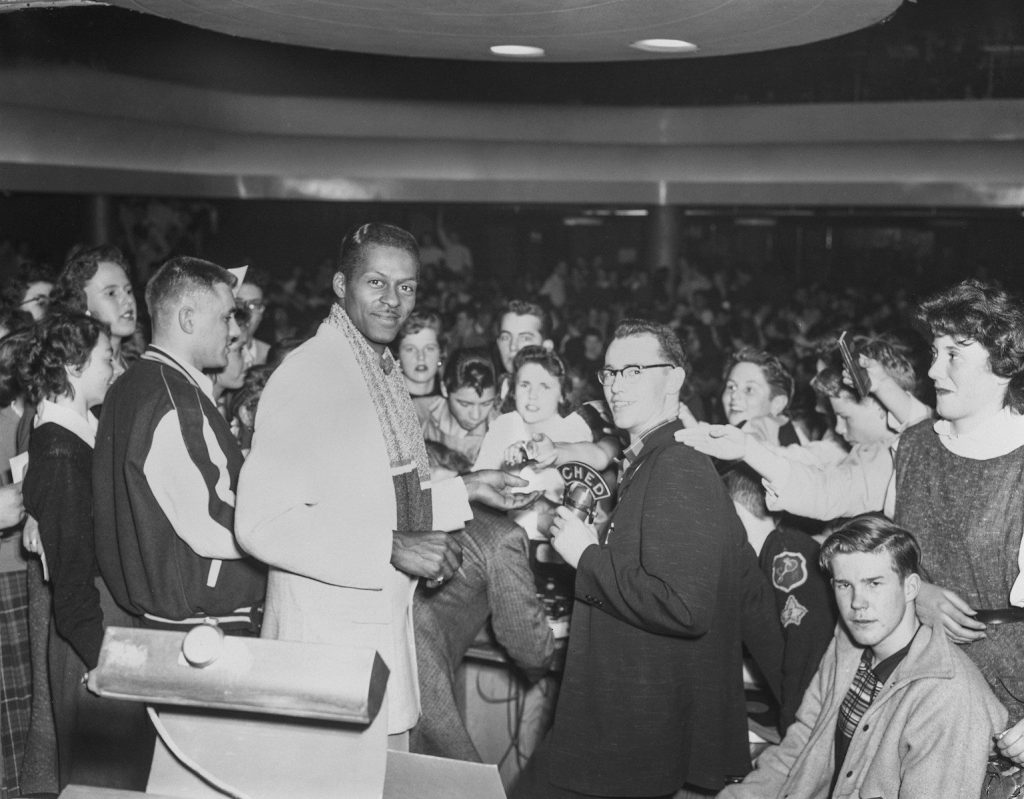
Johnny B. Goode became one of the defining songs of early rock and roll. The opening guitar riff shaped generations of musicians, including Keith Richards and Jimi Hendrix, who both cited Berry’s guitar style as a major influence.
The lyrics follow a poor country boy from Louisiana with exceptional guitar talent. Berry drew loosely from his own experiences and turned the story into an energetic celebration of ambition and musical skill. The guitar solos became a standard many rock musicians later tried to match.
In 1977, NASA included the song on the Voyager Golden Record, recognizing it as an important example of human creativity and culture.
2. “Hound Dog” by Elvis Presley (1956)
Big Mama Thornton first recorded Hound Dog in 1952, and it topped the R&B charts for seven weeks. Presley’s 1956 version became one of the decade’s biggest commercial successes.
The song sold more than ten million copies in its first year and stayed at number one on the Billboard pop chart for eleven weeks. Presley’s performance on The Ed Sullivan Show drew an estimated 60 million viewers. Television producers famously filmed him from the waist up because of concerns over his energetic stage movements.
The song became part of larger cultural debates surrounding youth culture and the growing popularity of Black musical styles in mainstream American entertainment.
3. “Earth Angel” by The Penguins (1955)

Earth Angel helped introduce doo-wop music to a national audience. Recorded in Los Angeles in 1954, the song crossed over from rhythm and blues radio to mainstream pop success.
The arrangement relied on layered harmonies, a simple chord structure, and a soft falsetto lead vocal. The modest production allowed the vocals to remain the focus throughout the song.
A new generation discovered the recording through Back to the Future, where it appeared during the school dance sequence. The original recording still sounded natural and timeless decades later.
4. “Great Balls of Fire” by Jerry Lee Lewis (1957)

Great Balls of Fire was recorded at Sun Studio in Memphis and packed intense energy into less than two minutes. Lewis’s piano playing drove the song with rolling rhythms and forceful strikes that kept the pace moving rapidly.
Lewis became known for unpredictable live performances that included standing while playing piano and occasionally setting the instrument on fire during concerts. That same intensity carried into the recording.
The song reached number two on the pop chart and also topped the country and R&B charts. Its crossover success reflected how musical genres were increasingly blending together during the 1950s.
5. “Stupid Cupid” by Connie Francis (1958)

Stupid Cupid highlighted the qualities that made Francis one of the late 1950s’ most successful female artists. Songwriters Neil Sedaka and Howard Greenfield wrote the track, pairing lively lyrics with Francis’s confident delivery.
The song focused on frustration with romance and relationships, delivered with humor and energy. Its fast pace and direct arrangement kept the momentum strong from beginning to end.
The single reached the top five in both the United States and the United Kingdom, helping launch Sedaka’s long songwriting career and strengthening Francis’s commercial success.
6. “Tutti Frutti” by Little Richard (1955)

Tutti Frutti opened with one of the most recognizable introductions in rock history. Richard’s powerful vocal style immediately separated the song from earlier popular music.
His gospel background shaped a performance style built around volume, precision, and emotional intensity. Every vocal phrase and piano section pushed the song’s momentum forward.
Pat Boone later recorded a cover version that sold more copies on the pop charts. That reflected the racial realities of the music industry during the 1950s, when Black artists often saw their songs re-recorded for white audiences. Richard’s original recording remained the version that influenced future musicians, including Paul McCartney.
7. “That’ll Be the Day” by Buddy Holly and The Crickets (1957)

That’ll Be the Day became Buddy Holly’s breakthrough hit. Its title came from a repeated line in The Searchers.
The Crickets operated as a self-contained band that wrote songs and played their own instruments. That model later influenced bands such as The Beatles. John Lennon later said hearing the song as a teenager encouraged him to pursue music seriously.
Holly’s clean guitar style balanced melody and rhythm in a way that became highly influential across rock music.
8. “Dream Lover” by Bobby Darin (1959)

Dream Lover showed a level of sophistication uncommon for many young pop artists of the era. Darin wrote the song himself at age 22, placing him among a smaller group of performers creating their own material.
Produced by Ahmet Ertegun at Atlantic Records, the song combined orchestral strings with layered backing vocals while keeping Darin’s warm vocal style at the center.
The single reached number two on the Billboard Hot 100 and topped the United Kingdom charts for four weeks. Darin soon followed it with “Mack the Knife,” further expanding his reputation as a versatile performer.
9. “Smoke Gets in Your Eyes” by The Platters (1958)

Smoke Gets in Your Eyes reworked a song first written for a 1933 Broadway production. Tony Williams delivered the lead vocal with clarity and restraint that gave the recording emotional depth.
The arrangement removed much of the original big-band style and focused on close harmonies and careful vocal timing. That simplicity placed full attention on the group’s performance.
The song reached number one in both the United States and the United Kingdom in early 1959. The 1950s produced many loud and energetic records, but “Smoke Gets in Your Eyes” showed the decade’s quieter side could be just as memorable.